



Hydroxypropyl methylcellulose is a kind of non-ionic cellulose mixed ether. Unlike ionic methyl carboxymethyl cellulose mixed ether, it does not react with heavy metals. Due to the different ratios of methoxyl content and hydroxypropyl content in hydroxypropyl methylcellulose and different viscosities, there are many varieties with different properties, for example, high methoxyl content and low hydroxypropyl content Its performance is close to that of methyl cellulose, while the performance of low methoxyl content and high hydroxypropyl content is close to that of hydroxypropyl methyl cellulose. However, in each variety, although only a small amount of hydroxypropyl group or a small amount of methoxyl group is contained, there are great differences in the solubility in organic solvents or the flocculation temperature in aqueous solutions.
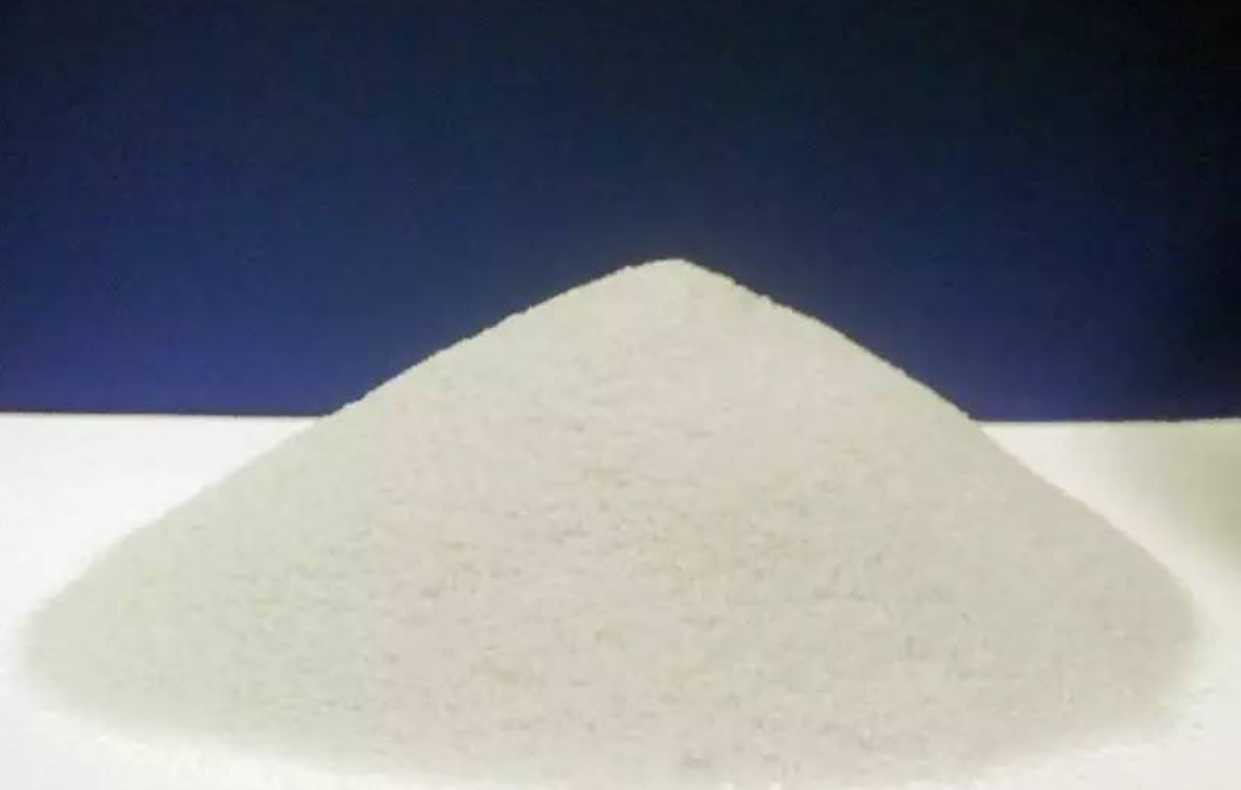
(1)?Solubility properties of hydroxypropyl methylcellulose
①?Solubility of hydroxypropyl methylcellulose in water Hydroxypropyl methylcellulose is actually a kind of methylcellulose modified by propylene oxide (methoxy-propylene), so it still has the same properties as methyl cellulose has similar characteristics of cold water solubility and hot water insolubility. However, due to the modified hydroxypropyl group, its gelation temperature in hot water is much higher than that of methyl cellulose. For example, the viscosity of hydroxypropyl methylcellulose aqueous solution with 2% methoxy content substitution degree DS=0.73 and hydroxypropyl content MS=0.46 is 500 mpa·s at 20°C, and its gel temperature It can reach close to 100°C, while methyl cellulose at the same temperature is only about 55°C. As for its solubility in water, it has also been greatly improved. For example, the pulverized hydroxypropyl methylcellulose (granular shape 0.2~0.5mm at 20°C with a 4% aqueous solution viscosity of 2pa?s can be purchased at room temperature, it is easily soluble in water without cooling.
②?Solubility of hydroxypropyl methylcellulose in organic solvents the solubility of hydroxypropyl methylcellulose in organic solvents is also better than that of methylcellulose. Methylcellulose needs to have a methoxyl substitution degree of 2.1 The above products, but containing hydroxypropyl MS=1.5~1.8 and methoxy DS=0.2~1.0, the high-viscosity hydroxypropyl methylcellulose with a total degree of substitution above 1.8 is dissolved in anhydrous methanol and ethanol solutions, and has thermos-plasticity and water solubility. It is also soluble in chlorinated hydrocarbons such as methylene chloride and chloroform, and organic solvents such as acetone, isopropanol and diacetone alcohol. Its solubility in organic solvents is better than water solubility.
(2)?Factors Influencing the Viscosity of Hydroxypropyl Methyl Cellulose The standard viscosity determination of hydroxypropyl methyl cellulose is the same as that of other cellulose ethers. It is measured at 20°C with 2% aqueous solution as the standard. The viscosity of the same product increases with the increase of concentration. For products with different molecular weights at the same concentration, the product with a larger molecular weight has a higher viscosity. Its relationship with temperature is similar to that of methyl cellulose. When the temperature rises, the viscosity begins to drop, but when it reaches a certain temperature, the viscosity suddenly rises and gelation occurs. The gel temperature of low-viscosity products is higher. is high. Its gel point is not only related to the viscosity of ether, but also related to the composition ratio of methoxyl group and hydroxypropyl group in ether and the size of the total substitution degree. It must be noted that hydroxypropyl methylcellulose is also pseudoplastic, and its solution is stable at room temperature without any degradation of viscosity except for the possibility of enzymatic degradation.
(3)?The salt tolerance of hydroxypropyl methylcellulose Since hydroxypropyl methylcellulose is a non-ionic ether, it is not ionized in water media, unlike other ionic cellulose ethers, such as carboxymethyl Base cellulose, in the solution to react with heavy metal ions and precipitate. General salts such as chloride, bromide, phosphate, nitrate, etc. will not precipitate when added to its aqueous solution. However, the addition of salt has some influence on the flocculation temperature of its aqueous solution. When the salt concentration increases, the gel temperature decreases. When the salt concentration is below the flocculation point, the viscosity of the solution tends to increase. Therefore, a certain amount of salt is added, in application, it can achieve thickening effect more economically. Therefore, in some applications, it is better to use a mixture of cellulose ether and salt than a higher concentration of ether solution to achieve the thickening effect.
(4)?Hydroxypropyl methylcellulose acid and alkali resistance Hydroxypropyl methylcellulose is generally stable to acids and alkalis, and is not affected in the range of pH 2~12. It can withstand a certain amount of light acid, Such as formic acid, acetic acid, citric acid, succinic acid, phosphoric acid, boric acid, etc. But concentrated acid has the effect of reducing viscosity. Alkalis such as caustic soda, caustic potash and lime water have no effect on it, but they can slightly increase the viscosity of the solution, and then slowly decrease it.
(5)?Miscibility of hydroxypropyl methylcellulose Hydroxypropyl methylcellulose solution can be mixed with water-soluble polymer compounds to become a uniform and transparent solution with higher viscosity. These polymer compounds include polyethylene glycol, polyvinyl acetate, polysilicone, polymethylvinyl siloxane, hydroxyethyl cellulose, and methyl cellulose. Natural high molecular compounds such as gum arabic, locust bean gum, karaya gum, etc. also have good compatibility with its solution. Hydroxypropyl methylcellulose can also be mixed with mannitol ester or sorbitol ester of stearic acid or palmitic acid, and can also be mixed with glycerin, sorbitol and mannitol, and these compounds can be used as hydroxypropyl methylcellulose Plasticizer for cellulose.
(6)?The insoluble water-soluble cellulose ethers of hydroxypropyl methylcellulose can carry out surface cross-linking with aldehydes, so that these water-soluble ethers are precipitated in the solution and become insoluble in water. The aldehydes that make hydroxypropyl methylcellulose insoluble include formaldehyde, glyoxal, succinic aldehyde, adipaldehyde, etc. When using formaldehyde, special attention should be paid to the pH value of the solution, among which glyoxal reacts faster, so glyoxal is commonly used as a crosslinking agent in industrial production. The dosage of this kind of cross-linking agent in the solution is 0.2%~10% of the mass of ether, preferably 7%~10%, for example, 3.3%~6% of glyoxal is the most suitable. Generally, the treatment temperature is 0~30℃, and the time is 1~120min. The crosslinking reaction needs to be carried out under acidic conditions. Generally, the pH of the solution is adjusted to about 2~6 by adding inorganic strong acid or organic carboxylic acid to the solution, preferably between 4~6, and then aldehydes are added to carry out the crosslinking reaction. The used acid has hydrochloric acid, sulfuric acid, phosphoric acid, formic acid, acetic acid, hydroxy-acetic acid, succinic acid or citric acid etc., wherein with formic acid or acetic acid is advisable, and formic acid is optimal. The acid and aldehyde can also be added simultaneously to allow the solution to undergo a cross-linking reaction within the desired pH range. This reaction is often used in the final treatment process in the preparation process of cellulose ethers. After the cellulose ether is insoluble, it is convenient to use.
20~25℃ water for washing and purification. When the product is in use, alkaline substances can be added to the solution of the product to adjust the pH of the solution to be alkaline, and the product will dissolve in the solution quickly. This method is also applicable to the treatment of the film after the cellulose ether solution is made into a film to make it an insoluble film.
(7)?The enzyme resistance of hydroxypropyl methylcellulose is theoretically cellulose derivatives, such as each anhydroglucose group, if there is a firmly bonded substituent group, it is not easy to be infected by microorganisms, but in fact the finished product When the substitution value exceeds 1, it will also be degraded by enzymes, which means that the degree of substitution of each group on the cellulose chain is not uniform enough, and microorganisms can erode on the unsubstituted anhydroglucose group to form sugars , as nutrients for microorganisms to absorb. Therefore, if the degree of etherification substitution of cellulose increases, the resistance to enzymatic erosion of cellulose ether will also increase. According to reports, under controlled conditions, the hydrolysis results of the enzymes made, the residual viscosity of hydroxypropyl methylcellulose (DS=1.9) is 13.2%, methylcellulose (DS=1.83) is 7.3%, methylcellulose (DS=1.66) is 3.8%, and hydroxyethyl cellulose is 1.7%. It can be seen that hydroxypropyl methylcellulose has a strong anti-enzyme ability. Therefore, the excellent enzyme resistance of hydroxypropyl methylcellulose, combined with its good dispersibility, thickening and film-forming properties, is used in water-emulsion coatings, etc., and generally does not need to add preservatives. However, for the long-term storage of the solution or possible contamination from the outside, preservatives can be added as a precaution, and the choice can be determined according to the final requirements of the solution. Phenylmercuric acetate and manganese fluorosilicate are effective preservatives, but they all have Toxicity, attention must be paid to the operation. Generally, 1~5mg of phenylmercury acetate can be added to the solution per liter of the dosage.

(8)?Performance of hydroxypropyl methylcellulose film Hydroxypropyl methylcellulose has excellent film-forming properties. Its aqueous solution or organic solvent solution is coated on a glass plate, and it becomes colorless and transparent after drying. And tough film. It has good moisture resistance and remains solid at high temperatures. If hygroscopic plasticizer is added, its elongation and flexibility can be enhanced. In terms of improving flexibility, plasticizers such as glycerin and sorbitol are the most suitable. Generally, the solution concentration is 2%~3%, and the amount of plasticizer is 10%~20% of cellulose ether. If the content of plasticizer is too high, colloidal dehydration shrinkage will occur at high humidity. The tensile strength of the film with plasticizer added is much larger than that without plasticizer, and it increases with the increase of the added amount. As for the hygroscopicity of the film, it also increases with the increase of the amount of plasticizer.
Post time: Jun-13-2023